
ICU Setup at Home in Patna: Equipment, Planning and Safety
Understand home ICU care, the equipment that may be required, nursing support, preparation, and safety planning with the treating doctor in Patna.
Published: 2026-09-24
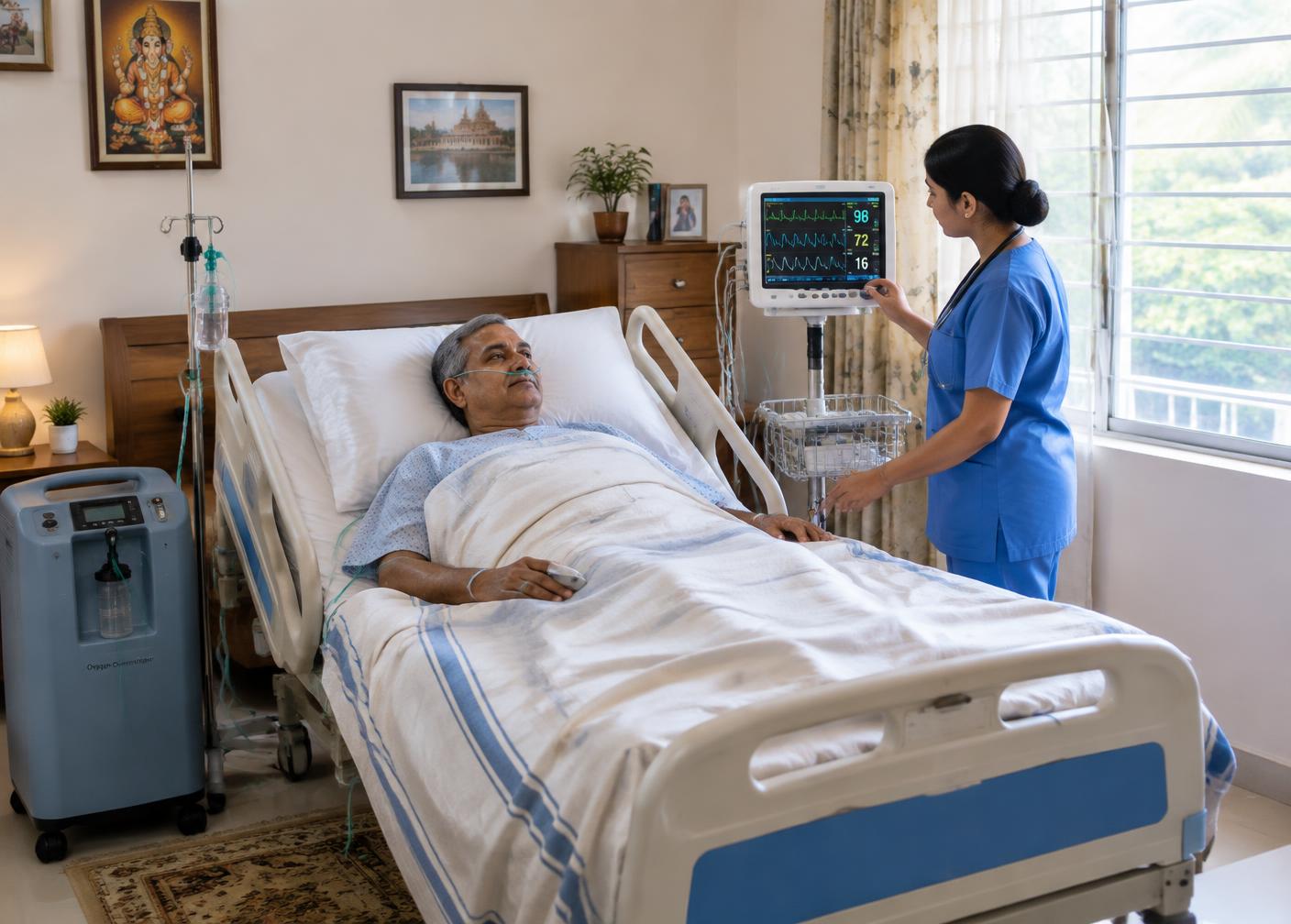
What Is an ICU Setup at Home?
An ICU setup at home involves arranging selected medical equipment and professional support for a patient who needs a higher level of monitoring or care outside a hospital. It may be considered in specific circumstances when the treating medical team determines that home care is appropriate.
Home-based critical care is not suitable for every patient. The patient's medical condition, stability, care requirements, home environment, and access to emergency hospital treatment must all be assessed before arrangements are made.
When May Home ICU Care Be Considered?
A treating doctor may discuss home-based care for certain patients who need continued monitoring or assistance after hospital treatment. The exact plan depends on the patient's condition, prescribed treatment, risk of deterioration, and the level of clinical support available at home.
Families should never move a critically ill or unstable patient from hospital to home solely because equipment can be arranged. The treating medical team must decide whether the transfer and home care plan are clinically appropriate.
What Equipment May Be Required?
Depending on the care plan, equipment may include a hospital bed, patient monitoring equipment, oxygen equipment, suction equipment, or other prescribed medical devices. Some patients may require additional respiratory support or specialised equipment under professional supervision.
Equipment requirements should be determined by qualified medical professionals. Before accepting a setup, confirm that the devices are appropriate for the patient, properly installed, maintained, and supported by trained personnel.
Why Qualified Medical Support Matters
Medical equipment alone does not provide critical care. The patient may also require appropriately qualified nursing professionals, clinical supervision, equipment checks, documentation, and a clear process for contacting the treating doctor.
Ask the provider about staff qualifications, shift coverage, equipment maintenance, backup arrangements, and the responsibilities of family members. Confirm which services are available and which need to be arranged separately.
Prepare an Emergency and Backup Plan
Before home care starts, discuss warning signs and escalation instructions with the treating doctor. Identify the hospital to contact if the patient's condition worsens, arrange reliable communication, and understand how an urgent transfer would be organised.
Also ask what backup arrangements are available if power fails or essential equipment stops working. The exact backup requirements depend on the devices being used and the patient's clinical needs.
Planning Home ICU Services in Patna
Families exploring an ICU setup at home in Patna should prepare the latest discharge summary, prescriptions, treatment plan, and any equipment recommendations. These details help the care provider understand the requirements before discussing availability and arrangements.
Life Save Home Care can be contacted to discuss home ICU setup and related nursing support. Final arrangements should follow the treating doctor's advice and a clear assessment of the patient's needs.
This article is general information, not medical advice. Life Save Home Care provides healthcare support and coordination services. Medical services are subject to patient condition, professional assessment, service availability and applicable medical guidance. In an emergency, contact appropriate emergency medical services immediately.